
Jeep Meridian Specifications
₹23.33 Lakh to ₹38.26 Lakhex-showroom
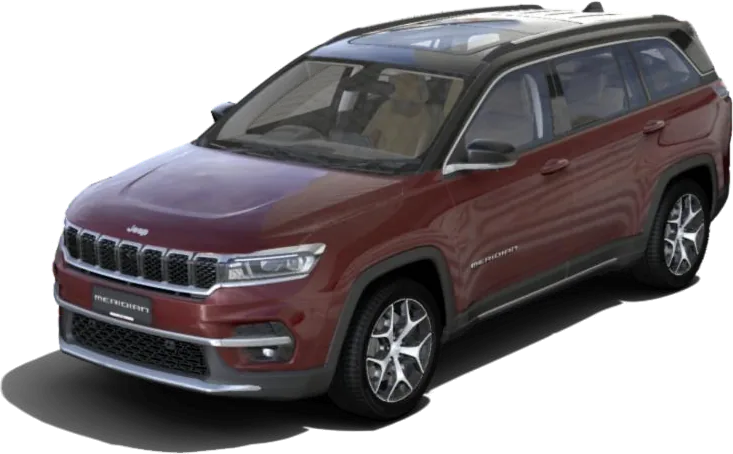
Showing the full spec sheet for the Longitude. Features this variant does not get are marked NA.
- Engine
- 2.0L Diesel
- Displacement
- 1956 cc
- Max Power
- 170 hp @ 3750 rpm
- Max Torque
- 350 Nm @ 1750 to 2500 rpm
- Transmission
- 6-Speed Manual
- Drive Type
- Front Wheel Drive
- Fuel Type
- Diesel
Jeep Meridian power and torque explained
The Meridian keeps your engine choice simple. There is one, a 2.0 litre diesel making 170 hp and 350 Nm, and no petrol version to weigh up.
What you do choose is how it drives. Front wheel drive comes with a six speed manual or a nine speed automatic, and the 4x4 is automatic only. This diesel is tuned to pull from low down rather than to chase high revs, which suits a heavy seven seater. You can see the whole range and features in the full Meridian rundown.
How to read this chart. Torque is the push you feel when you accelerate, and it peaks low on the rev range. Power is how hard the engine keeps pulling as it revs higher, and it peaks further up. The two dots mark those peaks. The shaded strip between them is the flexibility band: a wider band pulls easily across more revs and feels relaxed in traffic, while a narrower band asks you to rev the engine more to get its best.
Peak figures come from the 2.0L Diesel spec sheet. The line between the two peaks is not a measured dyno curve.
The 2.0 litre diesel serves up its full 350 Nm at just 1750 rpm, so the strongest shove is there almost as soon as you pull away. That low pull is what moves seven people and their bags without any drama, in town or on a climb. Peak power of 170 hp lands low at 3750 rpm, so you never have to rev it hard to make good progress. From that torque peak up to peak power sits a 2000 rpm spread, so one gear stretches a long way and you shift less in traffic. Pick it with the nine speed automatic for easy family miles, or the 4x4 automatic if your roads get rough. Before you lock a variant, check the on road price near you.