
Honda Elevate Facelift Specifications
₹11.80 Lakh to ₹18.40 Lakhex-showroom
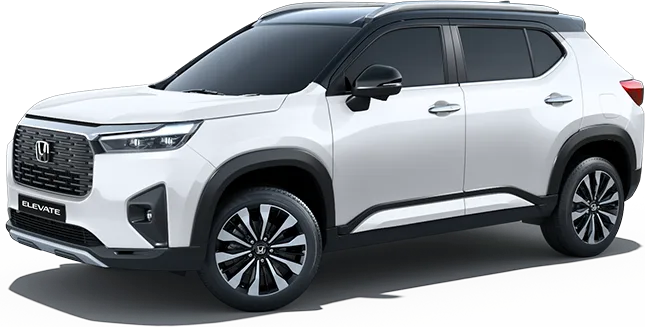
Showing the full spec sheet for the SV. Features this variant does not get are marked NA.
- Engine
- 1.5L i-VTEC Petrol
- Displacement
- 1498 cc
- Max Power
- 121 PS @ 6600 rpm
- Max Torque
- 145 Nm @ 4300 rpm
- Transmission
- 6-Speed Manual
- Drive Type
- Front Wheel Drive
- Fuel Type
- Petrol
Honda Elevate Facelift power and torque explained
The Elevate gives you one engine, a 1.5 litre i-VTEC petrol with 121 PS. What changes is the gearbox. You can have a six speed manual or a CVT automatic, so your choice is really about how you like to drive, not how much power you get.
By nature it is a smooth petrol that prefers revs to low down grunt. Around town it stays calm and easy to drive, so it never feels highly strung in stop and go traffic.
How to read this chart. Torque is the push you feel when you accelerate, and it peaks low on the rev range. Power is how hard the engine keeps pulling as it revs higher, and it peaks further up. The two dots mark those peaks. The shaded strip between them is the flexibility band: a wider band pulls easily across more revs and feels relaxed in traffic, while a narrower band asks you to rev the engine more to get its best.
Peak figures come from the 1.5L i-VTEC Petrol spec sheet. The line between the two peaks is not a measured dyno curve.
The 1.5 i-VTEC makes its peak 145 Nm of torque at 4300 rpm, and the full 121 PS lands high at 6600 rpm, 2300 rpm further up. So the strongest pull sits in the upper half of the rev range, and there is little low down shove. For a confident highway overtake, drop a gear and let it climb, because that is where it feels keenest. A full load of passengers up a long climb will ask for more revs too. If your days are mostly city traffic, the CVT keeps things effortless, while the six speed manual rewards you if you enjoy holding a gear. It helps to compare how the trims and both gearboxes stack up before you decide. Once a grade fits, it is worth checking what it comes to on the road in your city before booking.