
Kia Seltos Specifications
₹11.24 Lakh to ₹21.81 Lakhex-showroom
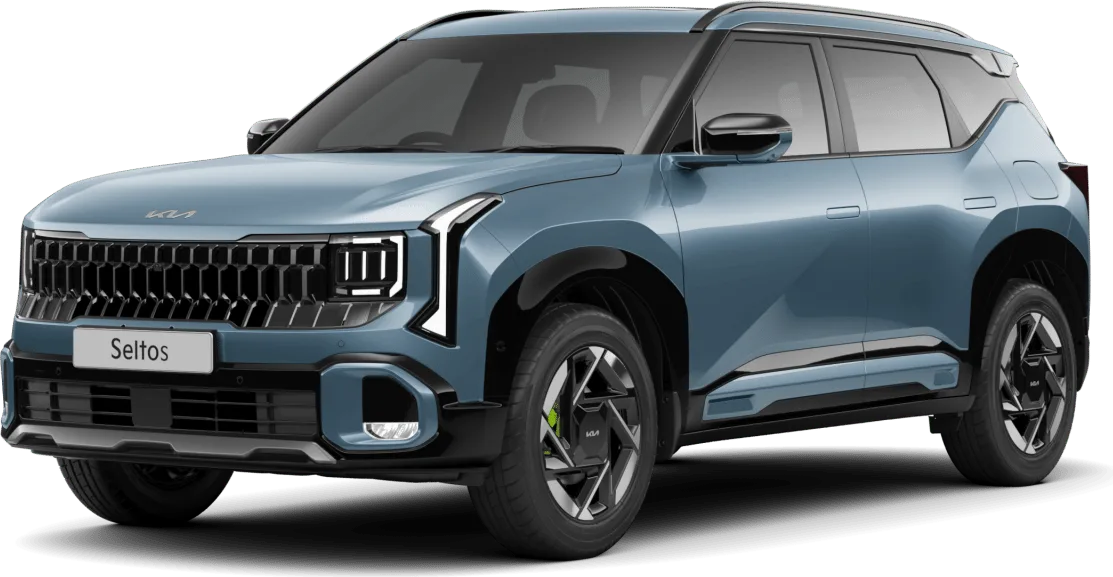
Showing the full spec sheet for the HTE Petrol. Features this variant does not get are marked NA.
- Engine
- 1.5L Smartstream Petrol
- Displacement
- 1497 cc
- Max Power
- 113 bhp @ 6300 rpm
- Max Torque
- 144 Nm @ 4500 rpm
- Transmission
- 6-Speed Manual
- Drive Type
- Front Wheel Drive
- Fuel Type
- Petrol
Kia Seltos power and torque explained
The Seltos gives you three engines with very different personalities. The 1.5 petrol makes its peak 144 Nm high up at 4500 rpm, so it stays relaxed low down and wakes up when you rev it.
The 1.5 diesel does the opposite, serving all 250 Nm from just 1500 rpm for easy, early pull. The 1.5 turbo petrol is the eager one, blending 160 PS with a strong 253 Nm.
How to read this chart. Torque is the push you feel when you accelerate, and it peaks low on the rev range. Power is how hard the engine keeps pulling as it revs higher, and it peaks further up. The two dots mark those peaks. The shaded strip between them is the flexibility band: a wider band pulls easily across more revs and feels relaxed in traffic, while a narrower band asks you to rev the engine more to get its best. Use the buttons above to compare this car's engines.
Peak figures come from the 1.5L Smartstream Petrol spec sheet. The line between the two peaks is not a measured dyno curve.
The 1.5 petrol peaks at 144 Nm at 4500 rpm and holds its 115 PS peak up at 6300 rpm. So you work the gears to get the best from it. It suits calm city driving and light loads. If most of your running is short daily trips, it is the easy, affordable choice, and it helps to compare the fuel economy each engine returns first.
The 1.5 diesel serves all 250 Nm from 1500 rpm and holds it to 2750 rpm, with 116 PS arriving by 4000 rpm. So the pull is strong and early, then it eases off as the revs climb. It cruises calmly, loves the highway, and shrugs off a full boot and five people. Pick it if you cover long distances every month and want relaxed overtakes.
The 1.5 turbo petrol is the quick one, with 253 Nm on tap from 1500 rpm all the way to 3500 rpm. Power climbs to 160 PS at 5500 rpm, so it pulls hard low down and still loves to rev. That makes overtakes easy and city gaps stress free. Kia pairs it only with a quick 7 speed DCT, so compare how the trims pair engine and gearbox before you book.