
MG Hector Specifications
₹12.14 Lakh to ₹19.64 Lakhex-showroom
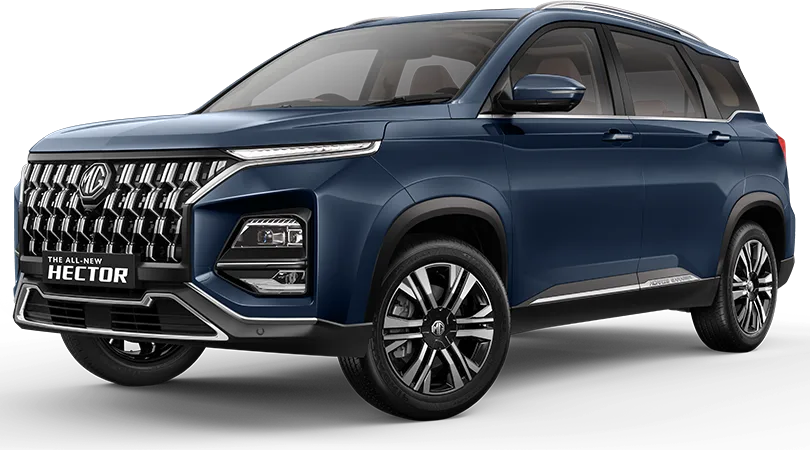
Showing the full spec sheet for the Style. Features this variant does not get are marked NA.
- Engine
- 1.5L Turbo Petrol
- Displacement
- 1451 cc
- Max Power
- 141 bhp (143 PS) @ 5200 rpm
- Max Torque
- 250 Nm @ 3000 rpm
- Transmission
- 6-Speed Manual
- Drive Type
- Front Wheel Drive
- Fuel Type
- Petrol
MG Hector power and torque explained
The MG Hector keeps things simple with one engine, a 1.5 litre turbo petrol. You decide how it drives with a six speed manual or a CVT automatic. It is tuned to pull hard from low revs, so it responds quickly the moment you touch the accelerator.
Because that engine is the same on every version, your main decision is trim and gearbox. You can line up all seven Hector trims with their manual and automatic options to find the one that fits your budget and needs.
How to read this chart. Torque is the push you feel when you accelerate, and it peaks low on the rev range. Power is how hard the engine keeps pulling as it revs higher, and it peaks further up. The two dots mark those peaks. The shaded strip between them is the flexibility band: a wider band pulls easily across more revs and feels relaxed in traffic, while a narrower band asks you to rev the engine more to get its best.
Peak figures come from the 1.5L Turbo Petrol spec sheet. The line between the two peaks is not a measured dyno curve.
The 1.5 turbo petrol makes its full 250 Nm of torque at just 1600 rpm, so the Hector pulls cleanly from low speeds and rarely feels strained in city traffic. Peak power of 143 PS lands higher up at 5000 rpm, so there is still plenty in reserve when you press on to overtake. With 3400 rpm separating those two peaks, you can hold a gear longer in the manual and let the CVT lope along calmly. This suits a family that mixes daily city runs with the odd long drive and wants an easy SUV. If fuel bills weigh on your choice, see where the petrol Hector's official mileage figures land before you pick manual or CVT.