
Tata Curvv Specifications
₹10.00 Lakh to ₹19.00 Lakhex-showroom
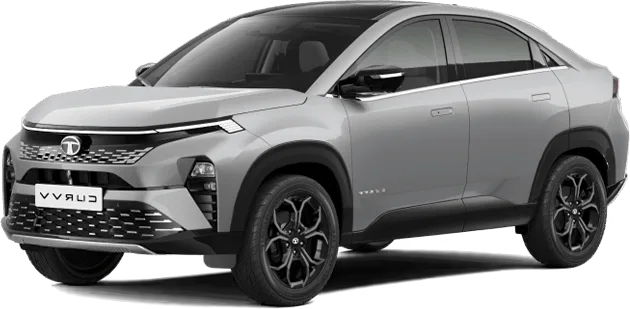
Showing the full spec sheet for the Smart X. Features this variant does not get are marked NA.
- Engine
- 1.2L Revotron Turbo Petrol
- Displacement
- 1199 cc
- Max Power
- 118 bhp @ 5500 rpm
- Max Torque
- 170 Nm @ 1750-4000 rpm
- Transmission
- 6-Speed Manual
- Drive Type
- Front Wheel Drive
- Emission Norm
- BS6 Phase 2
- Fuel Type
- Petrol
Tata Curvv power and torque explained
The Curvv gives you three engines to think about. One is a 1.5 litre turbo diesel. The other two are both the 1.2 litre turbo petrol, one making 120 PS and a punchier one making 125 PS.
They feel quite different on the road. The diesel pulls hard from low in the rev range and stays relaxed. The 120 PS petrol is the keen one that likes to rev. The 125 PS petrol keeps that eagerness but adds noticeably more low-down punch.
How to read this chart. Torque is the push you feel when you accelerate, and it peaks low on the rev range. Power is how hard the engine keeps pulling as it revs higher, and it peaks further up. The two dots mark those peaks. The shaded strip between them is the flexibility band: a wider band pulls easily across more revs and feels relaxed in traffic, while a narrower band asks you to rev the engine more to get its best. Use the buttons above to compare this car's engines.
Peak figures come from the 1.5L Kryojet Turbo Diesel spec sheet. The line between the two peaks is not a measured dyno curve.
The 1.5 turbo diesel is the low-down worker of the range. Its full 260 Nm of torque arrives from just 1500 rpm and stays with you to 2750 rpm, while power peaks at 118 PS at 4000 rpm. Because so much pull comes so early, it feels strong on the highway and shrugs off a full load of people and bags. Choose it if you rack up long distances or want relaxed overtakes without dropping a gear. If you are weighing it against the petrols, our full rundown on what the Curvv is like to live with lays out the bigger picture.
The 1.2 turbo petrol in 120 PS form is the eager, rev-friendly one. Its 170 Nm of torque spreads across a wide window, from 1750 rpm right up to 4000 rpm, and the full 120 PS lands high at 5500 rpm. So it rewards you for revving it out and stays lively as the road opens up. It makes a happy city companion that still enjoys a spirited run. Go for this one if most of your driving is around town and you like a petrol that feels keen.
The 1.2 turbo petrol in 125 PS form is the muscular petrol. It serves up 225 Nm of torque from 1750 rpm to 3000 rpm, and peak power of 125 PS at 5000 rpm. So it pulls harder through the mid-range than the 120 PS version, yet still spins up willingly. That makes it the sweet spot if you mix city runs with highway miles and want brisk overtakes from a petrol. When you are ready, you can match each engine to the trims and gearboxes on offer.