
Toyota Glanza Facelift Specifications
₹6.99 Lakh to ₹10.98 Lakhex-showroom
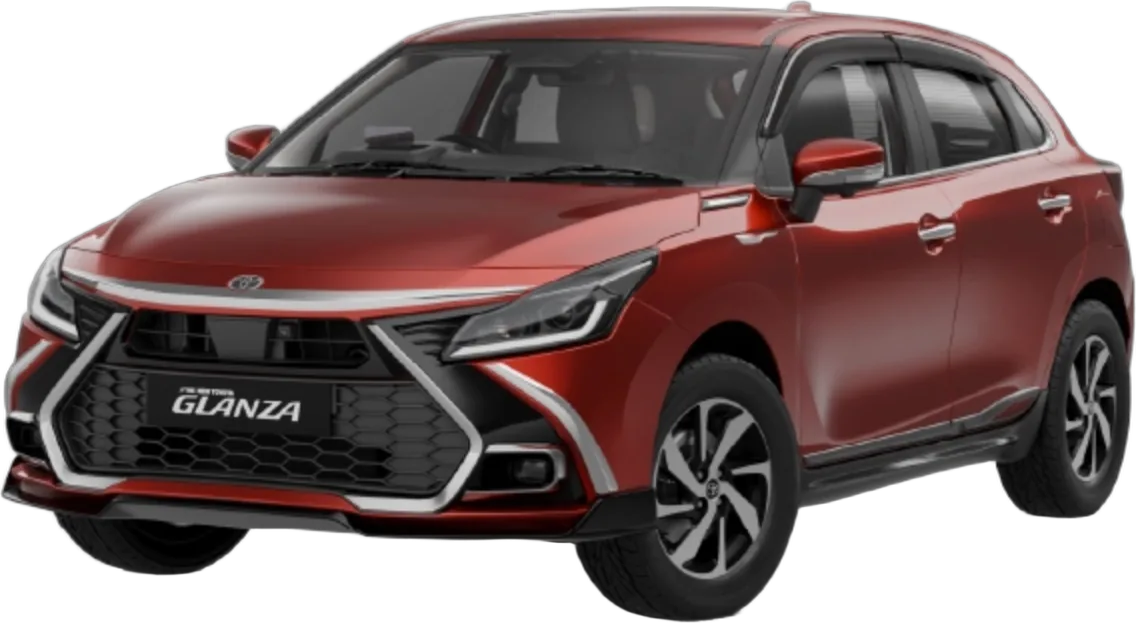
Showing the full spec sheet for the E. Features this variant does not get are marked NA.
- Engine
- 1.2L Z12E Petrol (3-cylinder)
- Displacement
- 1197 cc
- Max Power
- 82 bhp @ 5700 rpm
- Max Torque
- 112.4 Nm @ 4500 rpm
- Transmission
- 5-Speed Manual
- Drive Type
- Front Wheel Drive
- Emission Norm
- BS6 Phase 2
- Fuel Type
- Petrol
Toyota Glanza power and torque explained
The facelift gives the Glanza a brand new engine. It is a 1.2 litre with three cylinders instead of four, and it runs on petrol or on factory CNG. On petrol it makes 82 bhp and 112.4 Nm. In CNG mode it gives 69 bhp and 101.8 Nm.
Think of power as how hard the car keeps pulling as speed builds, and torque as the shove you feel when you pull away. The petrol has more of both. The CNG, though, delivers its shove much earlier, and that changes how each one suits your driving.
How to read this chart. Torque is the push you feel when you accelerate, and it peaks low on the rev range. Power is how hard the engine keeps pulling as it revs higher, and it peaks further up. The two dots mark those peaks. The shaded strip between them is the flexibility band: a wider band pulls easily across more revs and feels relaxed in traffic, while a narrower band asks you to rev the engine more to get its best. Use the buttons above to compare this car's engines.
Peak figures come from the 1.2L Z12E E-CNG (3-cylinder) spec sheet. The line between the two peaks is not a measured dyno curve.
The 1.2 petrol reaches its 112.4 Nm of torque at 4,500 rpm and its full 82 bhp at 5,700 rpm. That is a narrow gap of just 1,200 rpm, and both peaks sit high up. In plain words, this engine likes to be revved. Around town you rarely need those peaks, but for a quick overtake, shift down a gear so the engine sits closer to them. If your week mixes city runs with highway trips, the petrol is the livelier pick. You can see every petrol trim before you decide.
The CNG side tells a different story. Its 101.8 Nm arrives at just 2,900 rpm, while the 69 bhp peak comes at 5,700 rpm. That 2,800 rpm spread is more than twice as wide as the petrol's, so the pull starts early and stays usable through the rev range. It has less power overall, so give yourself more room for highway overtakes. For long daily commutes in stop and go traffic, it is the sensible and cheaper choice. Then check what CNG versions cost on-road.