
Toyota Hilux Specifications
₹31.99 Lakh to ₹36.69 Lakhex-showroom
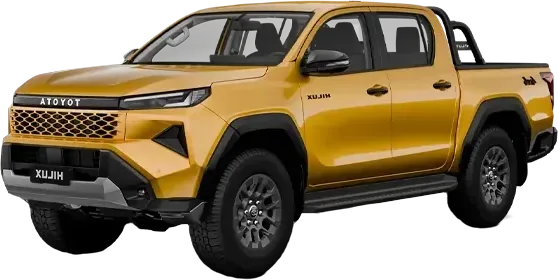
Showing the full spec sheet for the GX 4x2 AT. Features this variant does not get are marked NA.
- Engine
- 2.8L Turbo Diesel
- Displacement
- 2755 cc
- Max Power
- 201.15 bhp @ 3000 to 3400 rpm
- Max Torque
- 500 Nm @ 1600 to 2800 rpm
- Transmission
- 6-Speed Automatic
- Drive Type
- Rear Wheel Drive
- Emission Norm
- BS6 Phase 2
- Fuel Type
- Diesel
Toyota Hilux power and torque explained
The Hilux keeps your engine choice simple. There is just one, a 2.8 litre turbo diesel, and it always comes with a 6 speed automatic. You get the same engine whether you pick the rear wheel drive 4x2 or the 4x4.
This diesel is tuned to pull, not to rev. Its full 500 Nm lands at just 1600 rpm, so the hardest shove sits low down where towing and loaded climbs happen. All three trims share this one engine. So your real choice is the spec level and whether you want 4x2 or 4x4, and you can see how the three Hilux trims split across those drive options.
How to read this chart. Torque is the push you feel when you accelerate, and it peaks low on the rev range. Power is how hard the engine keeps pulling as it revs higher, and it peaks further up. The two dots mark those peaks. The shaded strip between them is the flexibility band: a wider band pulls easily across more revs and feels relaxed in traffic, while a narrower band asks you to rev the engine more to get its best.
Peak figures come from the 2.8L Turbo Diesel spec sheet. The line between the two peaks is not a measured dyno curve.
The 2.8 turbo diesel puts out its full 500 Nm at just 1600 rpm, barely above idle. So the Hilux hauls a heavy load or crawls up a steep ramp without you working the throttle. Peak power of 204 PS then arrives low at 3000 rpm, so you never have to rev it hard. With 1400 rpm between the torque peak and the power peak, one gear pulls you from a slow crawl to a highway overtake, so you shift far less. This engine rewards steady, loaded, long distance work more than quick sprints. If it fits how you drive, check what a Hilux lands at on the road in your city before you pick a trim.