
Toyota Urban Cruiser Hyryder Specifications
₹12.82 Lakh to ₹19.99 Lakhex-showroom
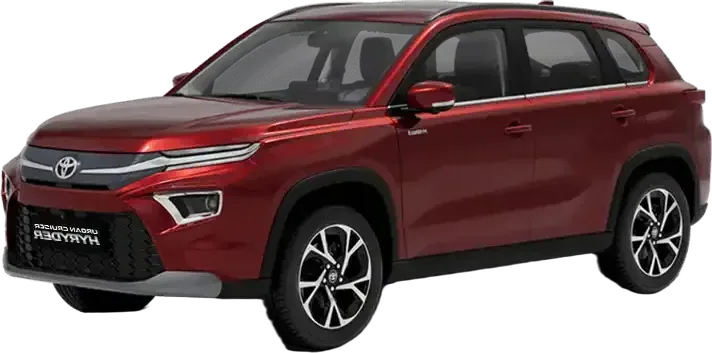
Showing the full spec sheet for the E. Features this variant does not get are marked NA.
- Engine
- 1.5L K-Series neoDrive Petrol with ISG
- Displacement
- 1462 cc
- Max Power
- 101.6 bhp @ 6000 rpm
- Max Torque
- 136.8 Nm @ 4400 rpm
- Transmission
- 5-Speed Manual
- Drive Type
- Front Wheel Drive
- Emission Norm
- BS6 Phase 2
- Fuel Type
- Petrol
Toyota Urban Cruiser Hyryder power and torque explained
The Hyryder gives you three engines, and they suit different drivers. There is a 1.5 litre neoDrive petrol that runs as a mild hybrid, the same 1.5 set up to run on CNG, and a 1.5 litre self-charging strong hybrid.
The petrol has more power and torque than the CNG and enjoys being revved. The CNG asks far less of you at the pump, though there is simply less to draw on. The strong hybrid adds an electric motor, which gives it an instant shove from rest and the best mileage of the three.
How to read this chart. Torque is the push you feel when you accelerate, and it peaks low on the rev range. Power is how hard the engine keeps pulling as it revs higher, and it peaks further up. The two dots mark those peaks. The shaded strip between them is the flexibility band: a wider band pulls easily across more revs and feels relaxed in traffic, while a narrower band asks you to rev the engine more to get its best. Use the buttons above to compare this car's engines.
Peak figures come from the 1.5L K-Series E-CNG spec sheet. The line between the two peaks is not a measured dyno curve.
The 1.5 petrol mild hybrid makes 103 PS at 6000 rpm and 136.8 Nm of torque at 4400 rpm. Both peaks sit high up, so this engine feels best when you let it spin. It is the one for open highways and quick overtakes, where you have room to drop a gear and rev it out. It keeps pulling all the way to that 6000 rpm power peak, which helps when you are carrying a full car. To see where it sits among the rest, the main Hyryder page lays out every engine and drive option.
The 1.5 CNG makes 88 PS at 5500 rpm and 121.5 Nm at 4200 rpm. Both numbers trail the petrol, and its power peaks earlier, at 5500 rpm. So you learn to plan an overtake rather than force one. It is at its happiest holding a steady city pace, which is exactly where the low CNG fuel cost pays you back. Pick it if you rack up big daily miles and want the smallest possible fuel bill. Since that saving is the whole reason to choose it, check what a CNG trim runs to on the road in your city before you decide.
The strong hybrid works as a team. Its 1.5 litre engine makes 91 bhp at 5500 rpm and 122 Nm between 4400 and 4800 rpm. The electric motor adds 79 bhp and 141 Nm from a standstill, for a combined 114 bhp. Because the motor's torque is there the moment you press the pedal, the hybrid feels eager off the line in traffic, and it can creep along on electric power alone. It is the pick if you drive mostly in the city and want the lowest fuel bill without CNG, so compare its 27.97 kmpl rating with the other engines.