
Toyota Innova Hycross Specifications
₹18.70 Lakh to ₹32.95 Lakhex-showroom
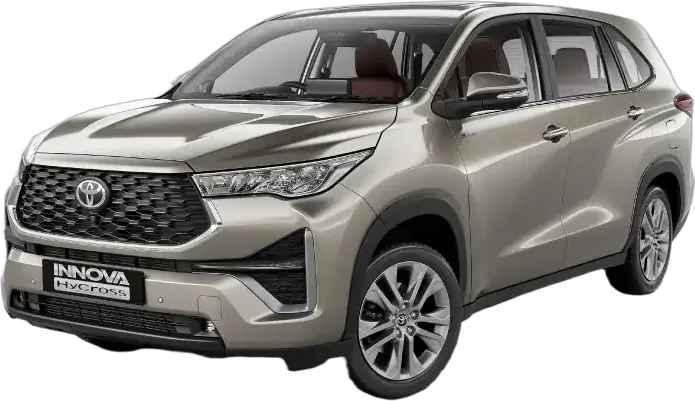
Showing the full spec sheet for the G-FLT 7-Seater. Features this variant does not get are marked NA.
- Engine
- 2.0L TNGA Petrol
- Displacement
- 1987 cc
- Max Power
- 169 bhp (126 kW) @ 6600 rpm
- Max Torque
- 204 Nm @ 4500-4900 rpm
- Transmission
- Direct Shift CVT with sequential shift
- Drive Type
- Front Wheel Drive
- Emission Norm
- BS6 Phase 2, E20 fuel compliant
- Fuel Type
- Petrol
Toyota Innova Hycross power and torque explained
The Innova Hycross gives you two ways to move its seven seats. You can have the 2.0 litre petrol, or the hybrid that Toyota tuned to sip fuel on long runs.
The petrol is the engine that likes to be worked, saving its strongest effort for higher up the rev range. The hybrid is the one to pick if a small fuel bill matters more to you, and it is worth seeing how many kilometres it returns from each litre.
How to read this chart. Torque is the push you feel when you accelerate, and it peaks low on the rev range. Power is how hard the engine keeps pulling as it revs higher, and it peaks further up. The two dots mark those peaks. The shaded strip between them is the flexibility band: a wider band pulls easily across more revs and feels relaxed in traffic, while a narrower band asks you to rev the engine more to get its best. Use the buttons above to compare this car's engines.
Peak figures come from the 2.0L TNGA Petrol spec sheet. The line between the two peaks is not a measured dyno curve.
The 2.0 petrol holds its 204 Nm of torque from 4500 to about 4900 rpm, and makes its full 126 kW, about 171 PS, at 6600 rpm. Both peaks sit high, with roughly 1700 rpm between them. So there is not much muscle low down, and the engine feels strongest once the revs climb toward those peaks. In town it stays calm enough, with the CVT keeping things smooth. But load all seven seats for a highway overtake, and you will want to let the revs build first. Choose the petrol if you want the lower entry price and are happy to rev the engine for its best work. When you are ready to choose, put all thirteen trims and their engines side by side and see which suits your family.
The hybrid pairs the 2.0 litre engine, with 191 Nm between 4400 and 5200 rpm, with an electric motor that adds 206 Nm. Toyota rates the system's output at 139 kW, about 186 bhp. The motor's torque arrives instantly, so the hybrid moves off smoothly and quietly even with a full cabin, and it can run on electric power at low speeds. Choose it if you drive a lot, since Toyota rates it at 22.16 kmpl against 16.13 kmpl for the petrol.