
Toyota Land Cruiser 300 Specifications
₹217.75 Lakh to ₹224.93 Lakhex-showroom
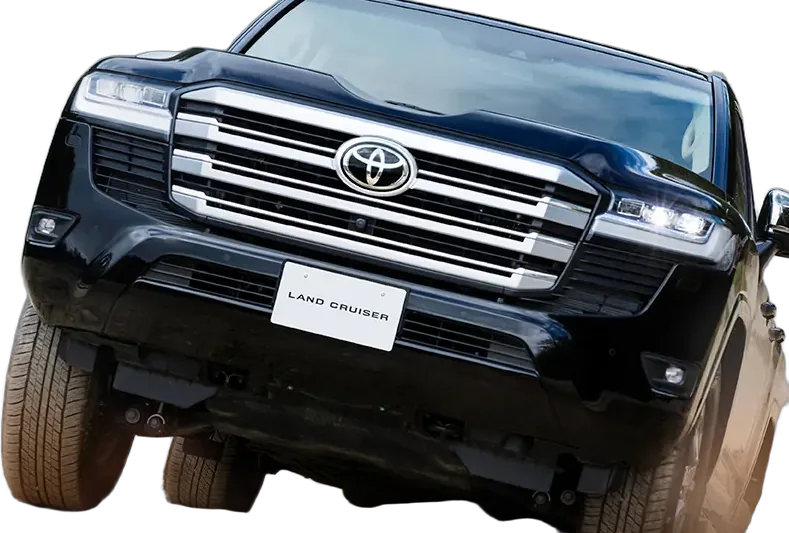
Showing the full spec sheet for the ZX. Features this variant does not get are marked NA.
- Engine
- 3.3L Twin-Turbo V6 Diesel
- Displacement
- 3346 cc
- Max Power
- 304 bhp (227 kW) @ 4000 rpm
- Max Torque
- 700 Nm @ 1600 to 2600 rpm
- Transmission
- 10-Speed Automatic
- Drive Type
- Four Wheel Drive
- Fuel Type
- Diesel
Toyota Land Cruiser 300 power and torque explained
The Land Cruiser 300 keeps things simple under the bonnet. Both grades share one engine, a 3.3 litre twin-turbo V6 diesel that makes 309 PS and a strong 700 Nm. It sends drive to all four wheels through a 10 speed automatic.
This diesel is built to move a heavy off-roader without drama, and it shapes how the full Land Cruiser 300 package feels behind the wheel. It pulls hardest low in the rev range, so it stays muscular and calm whether you are picking over rocks or settled into a long highway run.
How to read this chart. Torque is the push you feel when you accelerate, and it peaks low on the rev range. Power is how hard the engine keeps pulling as it revs higher, and it peaks further up. The two dots mark those peaks. The shaded strip between them is the flexibility band: a wider band pulls easily across more revs and feels relaxed in traffic, while a narrower band asks you to rev the engine more to get its best.
Peak figures come from the 3.3L Twin-Turbo V6 Diesel spec sheet. The line between the two peaks is not a measured dyno curve.
The 3.3 litre twin-turbo V6 diesel lays down its full 700 Nm at just 1600 rpm. That early peak lets it haul a loaded cabin, a trailer or a rocky climb from barely above idle, with no need to work the engine. Power then peaks at 309 PS at 4000 rpm, so there is a wide 2400 rpm spread on tap for overtakes and long uphill hauls. This engine rewards relaxed highway cruising and steady off-road crawling far more than hard revving. Both the ZX and the GR Sport share this engine, so your choice comes down to kit and off-road hardware, not pace. It is worth comparing what the two grades give you before you decide.