
Volkswagen Taigun Facelift Specifications
₹10.99 Lakh to ₹19.46 Lakhex-showroom
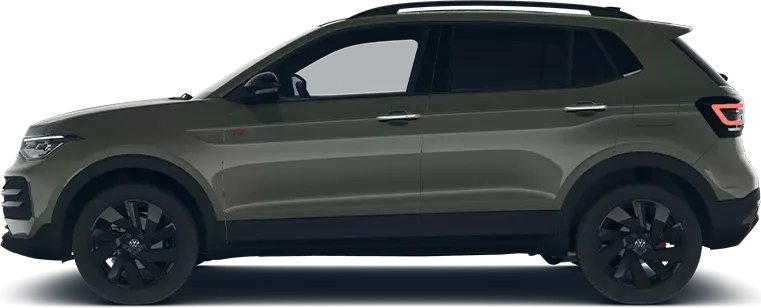
Showing the full spec sheet for the Comfortline. Features this variant does not get are marked NA.
- Engine
- 1.0L TSI Petrol
- Displacement
- 999 cc
- Max Power
- 115 PS @ 5000 to 5500 rpm
- Max Torque
- 178 Nm @ 1850 to 4000 rpm
- Transmission
- 6-Speed Manual
- Drive Type
- Front Wheel Drive
- Fuel Type
- Petrol
Volkswagen Taigun power and torque explained
The Taigun facelift keeps two turbo petrol engines. The 1.0 TSI three cylinder makes 115 PS and 178 Nm, now with a six speed manual or a new eight speed automatic. The 1.5 TSI four cylinder makes 150 PS and 250 Nm with a seven speed DSG.
The 1.0 TSI covers nine of the eleven variants, while the 1.5 TSI is kept for the GT Plus Chrome and GT Plus Sport.
How to read this chart. Torque is the push you feel when you accelerate, and it peaks low on the rev range. Power is how hard the engine keeps pulling as it revs higher, and it peaks further up. The two dots mark those peaks. The shaded strip between them is the flexibility band: a wider band pulls easily across more revs and feels relaxed in traffic, while a narrower band asks you to rev the engine more to get its best. Use the buttons above to compare this car's engines.
Peak figures come from the 1.0L TSI Petrol spec sheet. The line between the two peaks is not a measured dyno curve.
The 1.0 TSI holds its 178 Nm from 1850 to 4000 rpm and reaches 115 PS between 5000 and 5500 rpm. Because the torque is spread so wide, it pulls smoothly in city traffic, and the extra ratios of the eight speed automatic help on the highway. This is the engine for mixed daily use, and the Taigun trim list shows how much choice it gives you.
The 1.5 TSI makes 250 Nm from 1600 to 3500 rpm and 150 PS between 5000 and 6000 rpm. That is a big step up in pulling power for overtakes and a loaded cabin. It also has Active Cylinder Technology, and Volkswagen certifies it at 18.85 km/l, close to the 1.0 TSI automatic, as the Taigun mileage page shows.