
Citroen Aircross Specifications
₹8.89 Lakh to ₹14.71 Lakhex-showroom
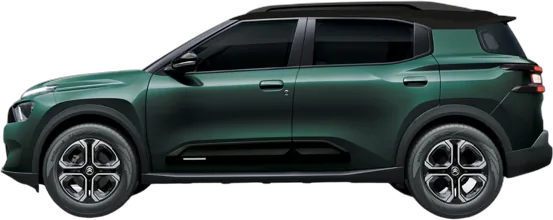
Showing the full spec sheet for the You. Features this variant does not get are marked NA.
- Engine
- 1.2L Petrol
- Displacement
- 1199 cc
- Max Power
- 82 PS @ 5750 rpm
- Max Torque
- 115 Nm @ 3750 rpm
- Transmission
- 5-Speed Manual
- Drive Type
- Front Wheel Drive
- Fuel Type
- Petrol
Citroen Aircross power and torque explained
The Citroen Aircross gives you two ways to go, and both use a 1.2 litre petrol engine. One is the plain petrol, the other adds a turbo for far more pull.
The plain 1.2 stays calm and asks for a few more revs before it feels quick. The turbo is a different character, doing its strongest work low down and holding that strength much longer.
How to read this chart. Torque is the push you feel when you accelerate, and it peaks low on the rev range. Power is how hard the engine keeps pulling as it revs higher, and it peaks further up. The two dots mark those peaks. The shaded strip between them is the flexibility band: a wider band pulls easily across more revs and feels relaxed in traffic, while a narrower band asks you to rev the engine more to get its best. Use the buttons above to compare this car's engines.
Peak figures come from the 1.2L Petrol spec sheet. The line between the two peaks is not a measured dyno curve.
The plain 1.2 petrol makes its 115 Nm of torque at 3750 rpm, then reaches its full 82 PS higher up at 5750 rpm. That is a fairly narrow 2000 rpm gap between the two peaks. So it comes alive in the middle of the rev range and wants you to keep it spinning. Around town at easy speeds it feels light and fuss free. For a brisk overtake or a full load you will drop a gear and let it spin. It suits city driving and shorter trips, and if low running cost is your worry, you can check its claimed mileage figures first.
The 1.2 turbo is the muscular one, with 190 Nm from 1750 rpm in the manual and 205 Nm in the automatic. That gives you real pull almost the moment you press the pedal. It then keeps pulling across a wide 3750 rpm spread up to its 110 PS peak at 5500 rpm. This is the engine for highways, for climbing hills, and for the seven seat version loaded with people and bags. Overtakes come easily without dropping down a gear. If you carry a full car or cover long distances often, this turbo is the one to pick. Our complete Aircross guide shows where it sits in the range.