
Hyundai Aura Specifications
₹5.99 Lakh to ₹8.67 Lakhex-showroom
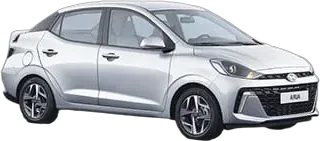
Showing the full spec sheet for the E. Features this variant does not get are marked NA.
- Engine
- 1.2L Kappa Petrol
- Displacement
- 1197 cc
- Max Power
- 82 bhp @ 6000 rpm
- Max Torque
- 113.8 Nm @ 4000 rpm
- Transmission
- 5-Speed Manual
- Drive Type
- Front Wheel Drive
- Fuel Type
- Petrol
Hyundai Aura power and torque explained
The Aura gives you one 1.2 litre Kappa engine tuned two ways. As a petrol it makes 83 PS, and as a factory bi-fuel it runs on CNG for 69 PS. Both are happiest higher up the rev range, since each one saves its strongest pull for 4000 rpm and full power for 6000 rpm.
The petrol is the livelier of the two, with more power and a firmer pull when you ask for it. The CNG gives up some of that pace in return for much cheaper running, so it feels calmer and wants a little more planning before an overtake.
How to read this chart. Torque is the push you feel when you accelerate, and it peaks low on the rev range. Power is how hard the engine keeps pulling as it revs higher, and it peaks further up. The two dots mark those peaks. The shaded strip between them is the flexibility band: a wider band pulls easily across more revs and feels relaxed in traffic, while a narrower band asks you to rev the engine more to get its best. Use the buttons above to compare this car's engines.
Peak figures come from the 1.2L Kappa Bi-fuel (Hy-CNG) spec sheet. The line between the two peaks is not a measured dyno curve.
The 1.2 petrol makes its best pull of 113.8 Nm at 4000 rpm and full 83 PS at 6000 rpm. It stays willing across the 2000 rpm between those two peaks, so it pulls cleanly for highway cruising and quick overtakes. In town you will drop a gear to wake it up, but it never feels strained. Pick it if you want the more eager engine, and you can line up the petrol trims against the CNG ones before you choose.
On CNG the same engine gives 95.2 Nm at 4000 rpm and 69 PS at 6000 rpm, so it revs like the petrol but with less muscle. Its best pull again lands at 4000 rpm, so around town you keep it spinning to stay brisk. It suits steady city commutes and light loads more than a fully loaded run up a ghat. Choose it if cutting your daily fuel bill matters most, and you can weigh up how far it goes on CNG before you decide.