
Tata Aeris Specifications
₹5.29 Lakh to ₹9.74 Lakhex-showroom
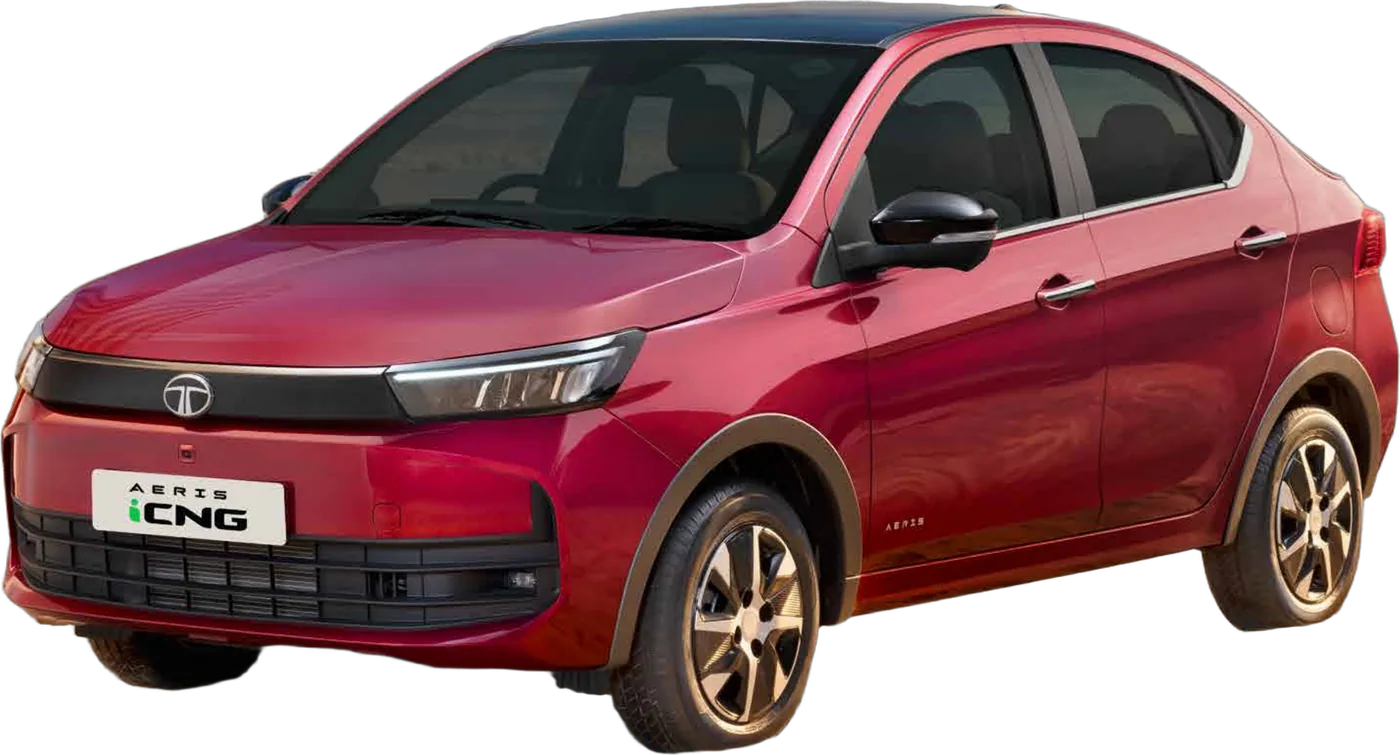
Showing the full spec sheet for the Smart. Features this variant does not get are marked NA.
- Engine
- 1.2L Revotron Petrol
- Displacement
- 1199 cc
- Max Power
- 85 bhp (86 PS) @ 6000 rpm
- Max Torque
- 113 Nm @ 3300 rpm
- Transmission
- 5-Speed Manual
- Drive Type
- Front Wheel Drive
- Emission Norm
- BS6 Phase 2
- Fuel Type
- Petrol
Tata Aeris power and torque explained
The Aeris runs a 1.2 litre engine, and you can have it burning petrol or as a factory fitted CNG. Both forms offer a manual or an AMT automatic, so the gearbox choice is yours either way.
The petrol is the eager one. It carries more torque and makes it lower down, so it pulls cleanly when you ask for a move. The CNG is softer and likes a few more revs, but it brings your running costs right down.
How to read this chart. Torque is the push you feel when you accelerate, and it peaks low on the rev range. Power is how hard the engine keeps pulling as it revs higher, and it peaks further up. The two dots mark those peaks. The shaded strip between them is the flexibility band: a wider band pulls easily across more revs and feels relaxed in traffic, while a narrower band asks you to rev the engine more to get its best. Use the buttons above to compare this car's engines.
Peak figures come from the 1.2L Revotron iCNG spec sheet. The line between the two peaks is not a measured dyno curve.
Go for the 1.2 Petrol if you want the stronger drive. Its 113 Nm of torque arrives at 3300 rpm, so it pulls hard from low speeds without much effort. Power tops out at 86 PS at 6000 rpm. With 2700 rpm between the two peaks, you can leave it in gear through most city driving and still have enough in hand for a highway overtake. It suits a loaded car and anyone who wants the quicker engine. To place it in the range, lay the petrol and CNG trims side by side.
The 1.2 CNG is the one for low running costs. It makes 96.5 Nm at 3500 rpm and 76 PS at 6000 rpm, with 2500 rpm between the two peaks. That slightly narrower spread means you drop a gear a bit more often for brisk moves. It feels happiest at a steady city pace rather than hard overtaking, so it fits daily commuters who cover big miles on cheaper fuel. Before you commit, see what it works out to on road in your city.